
Showing posts with label critical thinking. Show all posts
Showing posts with label critical thinking. Show all posts
Thursday, August 29, 2013

Monday, August 26, 2013
Thinking Critically
Frank Smith in his book To Think refers to the work of Ennis[1]
in determining attributes of critical thinking: Grasping the meaning of a
statement and judging whether
Smith basically thinks that critical thinking is not a skill, but a disposition and requires knowledge of the subject and the authority to think critically, even if that is granted by the person doing the thinking.
“Critical and creative thinking may be viewed academically as unique mental activities, in which individuals can be deficient, but the elements of thinking critically and creatively are in everyone's behavioral and cognitive repertoire. People may often not appear to be thinking critically or creatively because they are often not in situations that permit or call for criticism or creativity, or because they are not disposed to behave critically or creatively in such situations. This does not mean that some individuals are totally incapable of thinking critically or creatively, or that they lack training. It is just that they are not thinking in those ways, for one reason or another.”
He explains further:
“If critical thinking is not a unique set of skills, if it is essentially something that everyone is capable of, that everyone does in some measure all the time, why does critical thinking-or its apparent absence attract such attention? I have a few more remarks to make about specific knowledge[4], which is at the heart of the ability to be a critical thinker. But there are two other factors to take into account in explaining why some people might not appear to be as critical in their thought as they might be. One of them I have briefly alluded to already, the matter of disposition[5]. The other is more contentious-the extent to which anyone is allowed to be a critical thinker. In other words-how serious all this talk about critical thinking is in the first place.”
The author expands his comments on knowledge:
“Critical thinking does not demand a complex array of learned skills, but competence in whatever you are thinking about. If you understand cooking, you can be critical of the way a meal is prepared. If you are an experienced football fan, you can criticize a football game. If you are a particular kind of engineer, you can criticize the way a bridge or a ship has been built. If you are unable to do any of these things, it will not be because you lack essential critical thinking skills, but because you lack the essential experience. You do not know enough.”
He concludes that critical thinking is a disposition – “a tendency to behave in particular ways on particular occasions.” “Critical thinking is an attitude, a frame of mind.” “…reflective skepticism – the judicious suspension of assent, a readiness to consider alternative explanations, not taking anything for granted when it might be reasonable to doubt.”
“Critical thinking reflects the way we perceive the world; its concern is not with the solution of "problems" but with the recognition of prejudices and biases-including our own. The beginning must be the old Greek adage ‘Know yourself.’"
“Critical thinkers are often not popular. The right to engage in critical thought is not distributed equally, especially in hierarchical, authoritarian, and bureaucratic societies. You could lose your job or your promotion, or your colleagues might find you less agreeable to work with.”
“Critical thinkers are critical; they are argumentative and unsettling; they rock the boat. They can have difficulty treading the line between constructive inquiry and nitpicking trouble-making. They may not always be comfortable to know.”
He closes the chapter with this admonition:
“Critical thinkers must not only reason, they must give reasons; they must not only evaluate arguments, they must argue. They must recognize, and engage in, techniques of persuasion. Effective critical thought is largely a rhetorical[6] exercise. Uncritical passivity in thought and expression go hand in hand.
To Think, Frank Smith, Teachers College Press, 1990, 181 pp
Read my summary of To Think at: http://www.scribd.com/doc/163221519/To-Think
- there is ambiguity in a line of reasoning
- certain statements contradict each other
- a conclusion necessarily follows
- a statement is specific enough
- a statement is actually the application of a certain principle
- an observation statement is reliable
- an inductive[2] conclusion is warranted
- the problem has been identified
- something is an assumption
- a definition is adequate
- a statement made by an alleged authority is acceptable
Ennis defines critical thinking as “determining the
authenticity, accuracy, and worth of information or knowledge claims.”[3]
Smith basically thinks that critical thinking is not a skill, but a disposition and requires knowledge of the subject and the authority to think critically, even if that is granted by the person doing the thinking.
“Critical and creative thinking may be viewed academically as unique mental activities, in which individuals can be deficient, but the elements of thinking critically and creatively are in everyone's behavioral and cognitive repertoire. People may often not appear to be thinking critically or creatively because they are often not in situations that permit or call for criticism or creativity, or because they are not disposed to behave critically or creatively in such situations. This does not mean that some individuals are totally incapable of thinking critically or creatively, or that they lack training. It is just that they are not thinking in those ways, for one reason or another.”
He explains further:
“If critical thinking is not a unique set of skills, if it is essentially something that everyone is capable of, that everyone does in some measure all the time, why does critical thinking-or its apparent absence attract such attention? I have a few more remarks to make about specific knowledge[4], which is at the heart of the ability to be a critical thinker. But there are two other factors to take into account in explaining why some people might not appear to be as critical in their thought as they might be. One of them I have briefly alluded to already, the matter of disposition[5]. The other is more contentious-the extent to which anyone is allowed to be a critical thinker. In other words-how serious all this talk about critical thinking is in the first place.”
The author expands his comments on knowledge:
“Critical thinking does not demand a complex array of learned skills, but competence in whatever you are thinking about. If you understand cooking, you can be critical of the way a meal is prepared. If you are an experienced football fan, you can criticize a football game. If you are a particular kind of engineer, you can criticize the way a bridge or a ship has been built. If you are unable to do any of these things, it will not be because you lack essential critical thinking skills, but because you lack the essential experience. You do not know enough.”
He concludes that critical thinking is a disposition – “a tendency to behave in particular ways on particular occasions.” “Critical thinking is an attitude, a frame of mind.” “…reflective skepticism – the judicious suspension of assent, a readiness to consider alternative explanations, not taking anything for granted when it might be reasonable to doubt.”
“Critical thinking reflects the way we perceive the world; its concern is not with the solution of "problems" but with the recognition of prejudices and biases-including our own. The beginning must be the old Greek adage ‘Know yourself.’"
“Critical thinkers are often not popular. The right to engage in critical thought is not distributed equally, especially in hierarchical, authoritarian, and bureaucratic societies. You could lose your job or your promotion, or your colleagues might find you less agreeable to work with.”
“Critical thinkers are critical; they are argumentative and unsettling; they rock the boat. They can have difficulty treading the line between constructive inquiry and nitpicking trouble-making. They may not always be comfortable to know.”
He closes the chapter with this admonition:
“Critical thinkers must not only reason, they must give reasons; they must not only evaluate arguments, they must argue. They must recognize, and engage in, techniques of persuasion. Effective critical thought is largely a rhetorical[6] exercise. Uncritical passivity in thought and expression go hand in hand.
There is no doubt that the world could do with much more
critical thinking. If critical thinking leads to better judgments, fewer
problems, and happier consequences, then it is not just children and youth that
are in need. It is unlikely that they will become better thinkers by
uncritically emulating adults. The development of critical thinking requires a
major shift across the generations, and the basis of that shift-if it is not to
be catastrophic-must be through language.”
To Think, Frank Smith, Teachers College Press, 1990, 181 pp
Read my summary of To Think at: http://www.scribd.com/doc/163221519/To-Think
[1]
Ennis, Robert H. (1962). A Concept of Critical Thinking, Harvard Educational
Review, 32 (1), 82 -83
[2] Inductive
reasoning (as opposed to deductive reasoning) is reasoning in which the
premises seek to supply strong evidence for (not absolute proof of) the truth
of the conclusion. While the conclusion of a deductive argument is supposed to
be certain, the truth of an inductive argument is supposed to be probable,
based upon the evidence given. Wikipedia
[3]
The author never mentions the ability to perceive when someone is lying. I
think that this needs to be covered specifically and will do so in a separate
article.
[4]
Knowledge is a familiarity with someone or something, which can include
information, facts, descriptions, or skills acquired through experience or
education. It can refer to the theoretical or practical understanding of a
subject. It can be implicit (as with practical skill or expertise) or explicit
(as with the theoretical understanding of a subject); it can be more or less
formal or systematic. In philosophy, the study of knowledge is called
epistemology; the philosopher Plato famously defined knowledge as
"justified true belief." However, no single agreed upon definition of
knowledge exists, though there are numerous theories to explain it. Knowledge
acquisition involves complex cognitive processes: perception, communication,
association and reasoning; while knowledge is also said to be related to the
capacity of acknowledgment in human beings. Wikipedia
[5] A
disposition is a habit, a preparation, a state of readiness, or a tendency to
act in a specified way. Wikipedia
[6]
Rhetoric is the art of discourse, an art that aims to improve the capability of
writers or speakers that attempt to inform, persuade, or motivate particular
audiences in specific situations. As a subject of formal study and a productive
civic practice, rhetoric has played a central role in the Western tradition.
Its best known definition comes from Aristotle, who considers it a counterpart
of both logic and politics, and calls it "the faculty of observing in any
given case the available means of persuasion." Rhetorics typically provide
heuristics for understanding, discovering, and developing arguments for
particular situations, such as Aristotle's three persuasive audience appeals,
logos, pathos, and ethos. The five canons of rhetoric, which trace the
traditional tasks in designing a persuasive speech, were first codified in
classical Rome: invention, arrangement, style, memory, and delivery. Along with
grammar and logic (or dialectic), rhetoric is one of the three ancient arts of
discourse. From Ancient Greece to the late 19th century, it was a central part
of Western education, filling the need to train public speakers and writers to
move audiences to action with arguments.
Sunday, August 25, 2013
Critical Thinking Class
A
course of DVDs and discussions. Lectures delivered by Steven Novella in
a series called "Your Deceptive Mind" Part 1 covers lectures 1-14 and
Part 2 (a separate course) covers 15-24.
Sunday, July 28, 2013
Friday, July 19, 2013
First Democracy
I really enjoyed this book, and I want to thank Paul Woodruff for making
this academic research accessible. I think we need a lot more of this
right now. We are in a time period of radical change, when much of what
we accepted as “truth” is shifting out from under our feet. During times
of great change, it’s wise to relearn the basics. Who are we? What are
we all about? And, where do we want to go?
Woodruff opens his introduction with, “Democracy is a beautiful idea – government by and for the people. Democracy promises us the freedom to exercise out highest capacities while it protects us from our worst tendencies. In democracy as it ought to be, all adults are free to chime in, to join the conversation on how they should arrange their life together. And no one is left free to enjoy the unchecked power that leads to arrogance and abuse.
Like many beautiful ideas, however, democracy travels through our minds shadowed by its doubles – bad ideas that are close enough to easily mistaken for the real thing. Democracy has many doubles, but the most seductive is majority rule, and this is not democracy. It is merely government by and for the majority.”
So Woodruff goes back to the first democracy – the ancient Athenians. He traces the development of the first democracy and describes its principles. Voting, majority rule, and elected representatives are generally accepted ideas in American democracy, but they were not part of the first democracy.
“These three doubles are not democracy. Voting is not, by itself, democratic. Majority rule is positively undemocratic. And, elected representation makes for serious problems in democracy. I have begun to say what democracy is not. Can I give a positive account?
Democracy is government by and for the people. That is hardly a definition, but it will do for a start. As a next step, I shall propose that a government is a democracy insofar as it tries to express the seven ideas of this book: freedom from tyranny, harmony, the rule of law, natural equality, citizen wisdom, reasoning without knowledge, and general education.”
The tools of the first democracy are unique to the time, culture and size of Athens:
Legal system: No professional judges or prosecutors. Any citizen could bring charges against another, and any citizen could serve on panels of judges that correspond to both our judges and juries.
Governing body: The Assembly consisted of the first 6,000 men to arrive at the Pnyx (a hillside not far from the Acropolis)
Checks on majority rule: The powers of the assembly were limited by law.
Lottery: The lottery, chosen equally fro the ten tribes, was used for juries, for Council of the 500, and for the legislative panel.
Elections: Some important positions were filled by election, especially those that required expert knowledge in military or financial affairs.
Accountability: On leaving office, a magistrate would have his record examined in a process called euthunai (setting things straight)
Woodruff describes the progression of ideas that preceded the Athenian democracy. Then he devotes a chapter to each of principles of the first democracy:
Freedom from Tyranny: “Tyrant (tyrannos) was not always a fearful word, and freedom (eleutheria) was not always associated with democracy. The two shifts in ideas were gradual and simultaneous. By the time democracy was mature, Athenians at least knew what they meant by tyranny – a kind of rule to be avoided at all costs. And, in contract to that, they knew what they meant by freedom. These two ideas we have inherited. And they are priceless.” Woodruff writes. “No one sleeps well in tyranny,” he continues. “Because the tyrant knows no law, he is a terror to his people. And, he lives in terror of his people, because he has taught them to be lawless. The fear he instills in others is close cousin to the fear he must live with himself, for the violence by which he rules could easily be turned against him.” He warns that democracy itself can be come tyrannical, the tyranny of the majority, “…democracy could be come a tyranny of hoi polloi, literally, of the many.” In Athens this became to mean the poor who banded together, acting as tyrants, supporting the interests of the poor over the rich. This led to a two party system, as the rich banded together to form the party of the few (hoi oligoi), the oligarchs. “If the people’s party went too far towards tyranny, then the oligarchs plotted civil war. If the oligarchs succeeded in gaining power, then, the people’s party would withdraw to plot their own violent return.” The Athenians recognized this oscillation and came to agreements to limit the rise of tyranny.
Harmony: “Without harmony there is no democracy.” Woodson comments. “What would government FOR the people mean if the people are so badly divided that there is nothing they want together? Without harmony the government rules in the interests of one group at the expense of another. If harmony fails, many people have no reason to take part in government; others conclude that they must achieve their goals outside of democratic politics altogether; or, violence, or even the threat of terror.”
The Rule of Law (Nomos): “When law is the ruler, no one is above the law. This seems like an idea that everyone would welcome, but in truth if has had many enemies, and still does. Individuals are always looking for ways to put themselves or their government above the law. Big business seeks endless protections against the law, world leaders scoff at international law, and ordinary citizens see nothing wrong with obstructing justice.”
Natural Equality: “James Madison did not believe in the equality of the rich and poor, and so he and other founders of the United States Constitution made sure that the rich would have greater power than the poor. Voters would have to show that they enjoyed a certain level of wealth. Not so in democratic Athens. Penniless citizens – and there were many of these – insisted that they should be free to take part in their government. They went to battle for this. And they won.”
Citizen Wisdom: “In First Democracy, ordinary people were asked to use their wisdom to pass judgment on their leaders.” Woodruff concludes, “…the heart of democracy is the idea that ordinary people have the wisdom to govern themselves.”
Reasoning Without Knowledge: “Reasoning without knowledge is essential in government,” he writes. “Doing it well requires open debate. Doing it poorly is the fault of leaders who silence opposition, conceal the basis of their reasoning, or pretend to an authority that does not belong to them.”
Education (Paideia): “Paideia is the lifeblood of democracy,” he writes. “…paideia should give a citizen the wisdom to judge what he is told by people who do claim to be experts. So we should call it super-expert-education.”
Woodruff concludes the book with an afterword entitled Are Americans Ready for Domocracy? wherein he takes each of the principles and asks questions about the present state of democracy in America. He ends the book with, “Are we ready to shake off the idea that we are already a perfect exemplar of democracy? Are we ready to put the goals of democracy foremost in our political minds, as many Athenians did? Are we ready to admit our mistakes and learn from them, as they did? Most important, are we ready to keep the great dream alive, the dream of a government of the people, by the people and for the people?”
First Democracy: the Challenge of an Ancient Idea, Paul Woodruff, Oxford University Press, 2005
Woodruff opens his introduction with, “Democracy is a beautiful idea – government by and for the people. Democracy promises us the freedom to exercise out highest capacities while it protects us from our worst tendencies. In democracy as it ought to be, all adults are free to chime in, to join the conversation on how they should arrange their life together. And no one is left free to enjoy the unchecked power that leads to arrogance and abuse.
Like many beautiful ideas, however, democracy travels through our minds shadowed by its doubles – bad ideas that are close enough to easily mistaken for the real thing. Democracy has many doubles, but the most seductive is majority rule, and this is not democracy. It is merely government by and for the majority.”
So Woodruff goes back to the first democracy – the ancient Athenians. He traces the development of the first democracy and describes its principles. Voting, majority rule, and elected representatives are generally accepted ideas in American democracy, but they were not part of the first democracy.
“These three doubles are not democracy. Voting is not, by itself, democratic. Majority rule is positively undemocratic. And, elected representation makes for serious problems in democracy. I have begun to say what democracy is not. Can I give a positive account?
Democracy is government by and for the people. That is hardly a definition, but it will do for a start. As a next step, I shall propose that a government is a democracy insofar as it tries to express the seven ideas of this book: freedom from tyranny, harmony, the rule of law, natural equality, citizen wisdom, reasoning without knowledge, and general education.”
The tools of the first democracy are unique to the time, culture and size of Athens:
Legal system: No professional judges or prosecutors. Any citizen could bring charges against another, and any citizen could serve on panels of judges that correspond to both our judges and juries.
Governing body: The Assembly consisted of the first 6,000 men to arrive at the Pnyx (a hillside not far from the Acropolis)
Checks on majority rule: The powers of the assembly were limited by law.
Lottery: The lottery, chosen equally fro the ten tribes, was used for juries, for Council of the 500, and for the legislative panel.
Elections: Some important positions were filled by election, especially those that required expert knowledge in military or financial affairs.
Accountability: On leaving office, a magistrate would have his record examined in a process called euthunai (setting things straight)
Woodruff describes the progression of ideas that preceded the Athenian democracy. Then he devotes a chapter to each of principles of the first democracy:
Freedom from Tyranny: “Tyrant (tyrannos) was not always a fearful word, and freedom (eleutheria) was not always associated with democracy. The two shifts in ideas were gradual and simultaneous. By the time democracy was mature, Athenians at least knew what they meant by tyranny – a kind of rule to be avoided at all costs. And, in contract to that, they knew what they meant by freedom. These two ideas we have inherited. And they are priceless.” Woodruff writes. “No one sleeps well in tyranny,” he continues. “Because the tyrant knows no law, he is a terror to his people. And, he lives in terror of his people, because he has taught them to be lawless. The fear he instills in others is close cousin to the fear he must live with himself, for the violence by which he rules could easily be turned against him.” He warns that democracy itself can be come tyrannical, the tyranny of the majority, “…democracy could be come a tyranny of hoi polloi, literally, of the many.” In Athens this became to mean the poor who banded together, acting as tyrants, supporting the interests of the poor over the rich. This led to a two party system, as the rich banded together to form the party of the few (hoi oligoi), the oligarchs. “If the people’s party went too far towards tyranny, then the oligarchs plotted civil war. If the oligarchs succeeded in gaining power, then, the people’s party would withdraw to plot their own violent return.” The Athenians recognized this oscillation and came to agreements to limit the rise of tyranny.
Harmony: “Without harmony there is no democracy.” Woodson comments. “What would government FOR the people mean if the people are so badly divided that there is nothing they want together? Without harmony the government rules in the interests of one group at the expense of another. If harmony fails, many people have no reason to take part in government; others conclude that they must achieve their goals outside of democratic politics altogether; or, violence, or even the threat of terror.”
The Rule of Law (Nomos): “When law is the ruler, no one is above the law. This seems like an idea that everyone would welcome, but in truth if has had many enemies, and still does. Individuals are always looking for ways to put themselves or their government above the law. Big business seeks endless protections against the law, world leaders scoff at international law, and ordinary citizens see nothing wrong with obstructing justice.”
Natural Equality: “James Madison did not believe in the equality of the rich and poor, and so he and other founders of the United States Constitution made sure that the rich would have greater power than the poor. Voters would have to show that they enjoyed a certain level of wealth. Not so in democratic Athens. Penniless citizens – and there were many of these – insisted that they should be free to take part in their government. They went to battle for this. And they won.”
Citizen Wisdom: “In First Democracy, ordinary people were asked to use their wisdom to pass judgment on their leaders.” Woodruff concludes, “…the heart of democracy is the idea that ordinary people have the wisdom to govern themselves.”
Reasoning Without Knowledge: “Reasoning without knowledge is essential in government,” he writes. “Doing it well requires open debate. Doing it poorly is the fault of leaders who silence opposition, conceal the basis of their reasoning, or pretend to an authority that does not belong to them.”
Education (Paideia): “Paideia is the lifeblood of democracy,” he writes. “…paideia should give a citizen the wisdom to judge what he is told by people who do claim to be experts. So we should call it super-expert-education.”
Woodruff concludes the book with an afterword entitled Are Americans Ready for Domocracy? wherein he takes each of the principles and asks questions about the present state of democracy in America. He ends the book with, “Are we ready to shake off the idea that we are already a perfect exemplar of democracy? Are we ready to put the goals of democracy foremost in our political minds, as many Athenians did? Are we ready to admit our mistakes and learn from them, as they did? Most important, are we ready to keep the great dream alive, the dream of a government of the people, by the people and for the people?”
First Democracy: the Challenge of an Ancient Idea, Paul Woodruff, Oxford University Press, 2005
Tuesday, July 9, 2013
Snowden, Polling and Critical Thinking
As you know from things I wrote before, I’m becoming
increasing wary of public opinion polls and the people who write about them.
Mark Mellman’s blog
post, “Have We Been Snowdened?” raised my curiosity on the subject. Below
is a summary of the data he writes about in his column. And, as a full disclosure
comment, I’m aware, and you should be also, by summarizing the data as I did I’m
altering exactly what each survey reported.
|
Survey
|
Question
|
Positive
|
Negative
|
Uncertain
|
|
Time
|
The person who leaked information about this secret program did a good
thing in informing the American public or a bad thing
|
54%
|
30%
|
6%
|
|
ABC/Washington Post
|
The NSA surveillance program was classified as secret, and was made
public by a former government contractor named Edward Snowden
|
48%
|
43%
|
9%
|
|
Reuters/Ipsos
|
Snowden leaked information to the press about NSA’s monitoring of
phone and Internet usage
|
31%
|
23%
|
46%
|
|
YouGov
|
Releasing the top secret information about government surveillance
programs was the right thing or wrong thing to do
|
+3%
|
|
|
First, I couldn’t verify all of the data he reported, specifically
the YouGov poll. And, when I went to look for this poll’s data (because Mellman
changed the format of how he chose to report the results) I found even more
polls on the subject. In browsing some of the poll data, I found that it makes
a big difference whether you ask a question about Snowden, his actions, or what
NSA is doing. I also have no guarantee that the sampling is valid in any of the
polls, or whether the statistics employed is valid because of complex system
effects. Moreover, the results depend upon when the poll was taken.
I’m not so interested in the results of these polls that I’ll
invest the research and critical thinking time to find out what the public may
think about this issue. However, look at the word usage in the polls – “leaked”
and “secret” in the Time poll; “surveillance”, “NSA” and “government contractor”
in the ABC poll; “leaked”, “press”, and “NSA” in the Reuters poll, the only one
to mention “Phone” and “Internet”; “top secret”, “government” and ”surveillance”
in the YouGov poll. These are all words likely to shift a person’s response to
the statement.
My sole reason for writing this is just to alert you to
critically examine any polling important to you. There are many ways to alter
the response, or to “skin a cat” as the old saying goes[1].
[1] “Mark
Twain used your version in A Connecticut Yankee in King Arthur’s Court in 1889:
“she was wise, subtle, and knew more than one way to skin a cat”, that is, more
than one way to get what she wanted.” http://www.worldwidewords.org/qa/qa-mor1.htm
Friday, July 5, 2013


Monday, July 1, 2013
How the Case for Austerity Has Crumbled
by Paul Krugman
The New York Review of Books, June 6, 2013
"In normal times, an arithmetic mistake in an economics paper would be a complete nonevent as far as the wider world was concerned. But in April 2013, the discovery of such a mistake—actually, a coding error in a spreadsheet, coupled with several other flaws in the analysis—not only became the talk of the economics profession, but made headlines. Looking back, we might even conclude that it changed the course of policy.
Why? Because the paper in question, “Growth in a Time of Debt,” by the Harvard economists Carmen Reinhart and Kenneth Rogoff, had acquired touchstone status in the debate over economic policy. Ever since the paper was first circulated, austerians—advocates of fiscal austerity, of immediate sharp cuts in government spending—had cited its alleged findings to defend their position and attack their critics. Again and again, suggestions that, as John Maynard Keynes once argued, “the boom, not the slump, is the right time for austerity”—that cuts should wait until economies were stronger—were met with declarations that Reinhart and Rogoff had shown that waiting would be disastrous, that economies fall off a cliff once government debt exceeds 90 percent of GDP.
Indeed, Reinhart-Rogoff may have had more immediate influence on public debate than any previous paper in the history of economics. The 90 percent claim was cited as the decisive argument for austerity by figures ranging from Paul Ryan, the former vice-presidential candidate who chairs the House budget committee, to Olli Rehn, the top economic official at the European Commission, to the editorial board of The Washington Post. So the revelation that the supposed 90 percent threshold was an artifact of programming mistakes, data omissions, and peculiar statistical techniques suddenly made a remarkable number of prominent people look foolish."
Read the article, click here
This is a very good case history of critical thinking in the field of economics. False statements that were not subjected to critical thinking resulted in bad economic policies with large negative impacts on people.
But even after this and other critical thinking essays have been published, the policies resist change.
I consider Krugman to be one of the most level headed, critical thinkers in economics who has a broad public audience. But, even he seems to despair. The closing paragraph of this artilce was like a dagger. If he can't affect policy, who can? And, what's my roles?
"The Reinhart-Rogoff debacle has raised some hopes among the critics that logic and evidence are finally beginning to matter. But the truth is that it’s too soon to tell whether the grip of austerity economics on policy will relax significantly in the face of these revelations. For now, the broader message of the past few years remains just how little good comes from understanding."
The New York Review of Books, June 6, 2013
"In normal times, an arithmetic mistake in an economics paper would be a complete nonevent as far as the wider world was concerned. But in April 2013, the discovery of such a mistake—actually, a coding error in a spreadsheet, coupled with several other flaws in the analysis—not only became the talk of the economics profession, but made headlines. Looking back, we might even conclude that it changed the course of policy.
Why? Because the paper in question, “Growth in a Time of Debt,” by the Harvard economists Carmen Reinhart and Kenneth Rogoff, had acquired touchstone status in the debate over economic policy. Ever since the paper was first circulated, austerians—advocates of fiscal austerity, of immediate sharp cuts in government spending—had cited its alleged findings to defend their position and attack their critics. Again and again, suggestions that, as John Maynard Keynes once argued, “the boom, not the slump, is the right time for austerity”—that cuts should wait until economies were stronger—were met with declarations that Reinhart and Rogoff had shown that waiting would be disastrous, that economies fall off a cliff once government debt exceeds 90 percent of GDP.
Indeed, Reinhart-Rogoff may have had more immediate influence on public debate than any previous paper in the history of economics. The 90 percent claim was cited as the decisive argument for austerity by figures ranging from Paul Ryan, the former vice-presidential candidate who chairs the House budget committee, to Olli Rehn, the top economic official at the European Commission, to the editorial board of The Washington Post. So the revelation that the supposed 90 percent threshold was an artifact of programming mistakes, data omissions, and peculiar statistical techniques suddenly made a remarkable number of prominent people look foolish."
Read the article, click here
This is a very good case history of critical thinking in the field of economics. False statements that were not subjected to critical thinking resulted in bad economic policies with large negative impacts on people.
But even after this and other critical thinking essays have been published, the policies resist change.
I consider Krugman to be one of the most level headed, critical thinkers in economics who has a broad public audience. But, even he seems to despair. The closing paragraph of this artilce was like a dagger. If he can't affect policy, who can? And, what's my roles?
"The Reinhart-Rogoff debacle has raised some hopes among the critics that logic and evidence are finally beginning to matter. But the truth is that it’s too soon to tell whether the grip of austerity economics on policy will relax significantly in the face of these revelations. For now, the broader message of the past few years remains just how little good comes from understanding."
Critical Thinking and Justice
According to Wikipedia, "Since the 15th century, Lady Justice has often been depicted wearing a
blindfold. The blindfold represents objectivity, in that justice is or
should be meted out objectively, without fear or favour, regardless of
identity, money, power, or weakness; blind justice and impartiality."
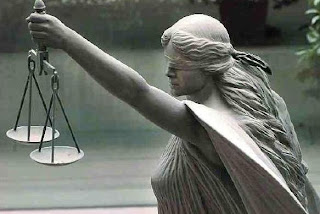
Isn't it curious that Lady Justice was always a woman, and that the first woman justice of the US Supreme Court was Sandra Day O'Connor in 1981?
I view this description of Lady Justice as a representation of critical thinking.
But, if I look at the recent rulings of the US Supreme Court, I do not see evidence of critical thinking. I see two voting blocks with one judge moving between the two blocks. Is this really justice?

Isn't it curious that Lady Justice was always a woman, and that the first woman justice of the US Supreme Court was Sandra Day O'Connor in 1981?
I view this description of Lady Justice as a representation of critical thinking.
But, if I look at the recent rulings of the US Supreme Court, I do not see evidence of critical thinking. I see two voting blocks with one judge moving between the two blocks. Is this really justice?
Thursday, June 27, 2013
STEM education is more than teaching and learning numbers
Austin American Statesman
By John Fitpatrick
Educate Texas
Critical Thinking and Sustainability
I was watching a recording of Dr. David Orr's talk, "Black Swans and the
US Future: Creating Sustainable and Resilient Societies", when a
question was raised at the end of the talk from a K-12 teacher group
about what was the one thing teachers could do the classrooms. His
answer, in my opinion, was right on target. I obtained a copy of the
video of the talk and extracted the clip of this question and his
answer. I think you will find the short video interesting.
Critical Thinking and Sustainability from Paul Schumann on Vimeo.
This talk is part of the Hot Science - Cool Talks program of the Environmental Science Institute at UT Austin. You can watch the complete talk at http://www.esi.utexas.edu/k-
Critical Thinking and Sustainability from Paul Schumann on Vimeo.
This talk is part of the Hot Science - Cool Talks program of the Environmental Science Institute at UT Austin. You can watch the complete talk at http://www.esi.utexas.edu/k-
Tuesday, June 25, 2013
Tuesday, June 4, 2013
Critical Thinking
Last year at the beginning of the election season, one of
the State’s political parties launched a platform with a plank in it that
opposed the teaching of critical thinking skills in public education. After a large public outcry, this platform
was edited to remove the offending thought. This issue came up in one of the
planning meetings of the Central Texas Chapter of the World Future Society and
the group present resolved to make critical thinking part of our program of
activities. This is in line with our longstanding vision, “Raising awareness of
the future and its impact on Central Texas”. Awareness is the first step of
critical thinking, followed by, among other things, discernment. The group
present in the planning meeting thought that critical thinking was an essential
part of future’s studies, both normative and projective.
Intuitively it appears that we are in an era when critical
thinking is necessary, not just for success, but survival. There are many
trends, global and local, temporal and eternal, that affect us, some that we
can change and some that we must just prepare for. Our future is one of very
large, complex systems, which at this point we neither understand nor control.
Some of these systems are intrinsically uncontrollable. And, we are entering
the world of big data driven by our technological capability to accomplish, and
spurred by the profit motive. Moreover, as
copious amounts of money are available, “opinions” based on data can be bought.
We are already swimming in a vast sea of data and opinions.
Given the vast amount of data, I am reminded of a statement
sometimes attributed to Mark Twain, “Figures don’t lie, but liars figure.”
Well, maybe not intentional lies, but biases based upon values, not open minded
logic. We will need a lot of critical thinking to, as Omar Khayyam phrased it,
“The two and seventy jarring sects confute.”
But what is critical thinking? How is it used in real life?
Is it a skill? Can it be taught? Is it something that should be a guiding
principle of this organization? What is our role in fostering critical
thinking?
A panel has been gathered to discuss critical thinking on
June 18, 2013 at the monthly meeting of the CenTexWFS beginning at 6pm at Marie
Callender’s 9503 Research Blvd #400 Austin, TX 78759
(512) 349-7151. It will be moderated by Paul Schumann and is composed of::
(512) 349-7151. It will be moderated by Paul Schumann and is composed of::
· Carol Flake Chapman: journalist, editor, author, founding editor of Vanity Fair Magazine
· Joyce Goia: futurist, trend analyst, editor of Herman Trend Alerts
· Terrill Fisher: improv artist, comedian, training consultant
· Jon Lebkowsky: programming, social media, editor of Extreme Democracy
· Diane Miller: civic collaboration, project planning, dialog and deliberation
If you wish to attend, please visit the group’s web site for more information. There is an
attendance fee of $25 that includes dinner that is payable at the event
.
Paul Schumann is
a futurist and innovation consultant who is currently researching complexity
science and its use in future’s studies. He is the author of four books – Innovate!,
An
Innovant’s Journey, Leadership in the Interactive Age
and Superconductivity
– and numerous articles, the latest of which is “1, 2, A Few and Many”. Follow
his blog, Insights and
Foresight, for more information.
Philomena Blees,
J.D. is President of Peace Through Commerce, Inc. (“PTC”) and a Trustee of
Conscious Capitalism, Inc. She was
founding Vice President, General Counsel, Treasurer and "Chief Problem
Solver" of PTC and Conscious Capitalism’s parent corporation, Freedom
Lights Our Word (FLOW), Inc.
Ms. Blees co-founded a school for gifted children in Austin,
Texas, as well as two educational nonprofit organizations. She served in the
office of General Counsel at the Texas State Treasury. Prior to this, Ms. Blees was an active
securities trader, and a partner in private practice in Honolulu, Hawaii
concentrating in tax, real property, and business law.
Ms. Blees is active in the American Creativity Association
(“ACA”) and co-founded ACA-Austin Global.
Ms. Blees received her law degree at the University of Hawaii
Richardson School of Law and was 1st in her class. She is a member of the State
Bar Associations of Texas and Hawaii, and is licensed to practice before the
U.S. Tax Court, Federal District Court and the 9th Circuit Court of Appeals. Ms. Blees loves running, hiking, dancing,
music, movement, creativity, and reading and is active with her two beloved
children and new daughter-in law.
Author of The Herman Trend Alert for the last seven
years, Joyce Gioia [joy-yah] has
been a professional futurist for decades. In fact, she joined the World Future
Society back in the late 60s, when she graduated from college and is now a
member of the national Board of Trustees. Once she became a consultant, she
discovered that helping clients know what was coming could be her competitive
advantage. Joyce is the author of five business books (three bestsellers) on
the future of the workforce and workplace. A frequent speaker at association
and corporate meetings, she informs and entertains her audiences with a
combination of wit and wisdom. Besides holding three masters degrees, she is a
Certified Management Consultant and Certified Speaking Professional. Joyce was
recently honored by USA TODAY as their FIRST ROAD WARRIOR OF THE YEAR. She says
that not only did critical thinking help her to win this award, she also uses
it every day to make informed decisions for herself and others.
Jon Lebkowsky is
an author, activist, sometimes journalist, and blogger who writes about the
future of the Internet, digital culture, media, and society. He’s been actively
associated with various forward-looking projects and organizations, including
FringeWare (CEO), Whole Earth, WorldChanging, Viridian Design Movement, Mondo
2000, bOING bOING, Factsheet Five, the WELL, the Austin Chronicle, EFF-Austin
(President), Society of Participatory Medicine (cofounder and former board
member), Extreme Democracy (co-editor), Wireless Future (project manager),
Digital Convergence Initiative (former board member), Plutopia Productions
(cofounder), Polycot Consulting (cofounder and CEO), Social Web Strategies
(cofounder), Project VRM, and Reality Augmented Blog. He’s currently a web
strategist and developer via Polycot Associates. There’s more info at Wikipedia.
Diane Miller
specializes in the design, facilitation and implementation of community
engagement projects that help diverse groups of people work together to find
common ground for action. For the last ten years, she has worked with Central
Texas governments, businesses and community groups to address complex civic
challenges. Before launching her firm, Civic Collaboration, in 2011, she was
assistant director for a regional planning non-profit where she designed and
executed numerous collaborative, multi-stakeholder initiatives on complicated
and often divisive issues. She has designed and led community forums on an
array of topics, from gentrification and regional planning, to education and
health care.
Before working in community engagement, Diane worked in the
field of organizational development, designing workshops and trainings focused
on leadership, teamwork, and change management. She has a B.A. in liberal arts
and has studied extensively in the areas of group dynamics, organizational and
human development, and civic participatory processes. Diane currently serves on
the board of The National Coalition on Dialogue and Deliberation. She has
completed certification programs in public engagement from both the
International Association for Public Participation and Fielding University.
Subscribe to:
Posts (Atom)